
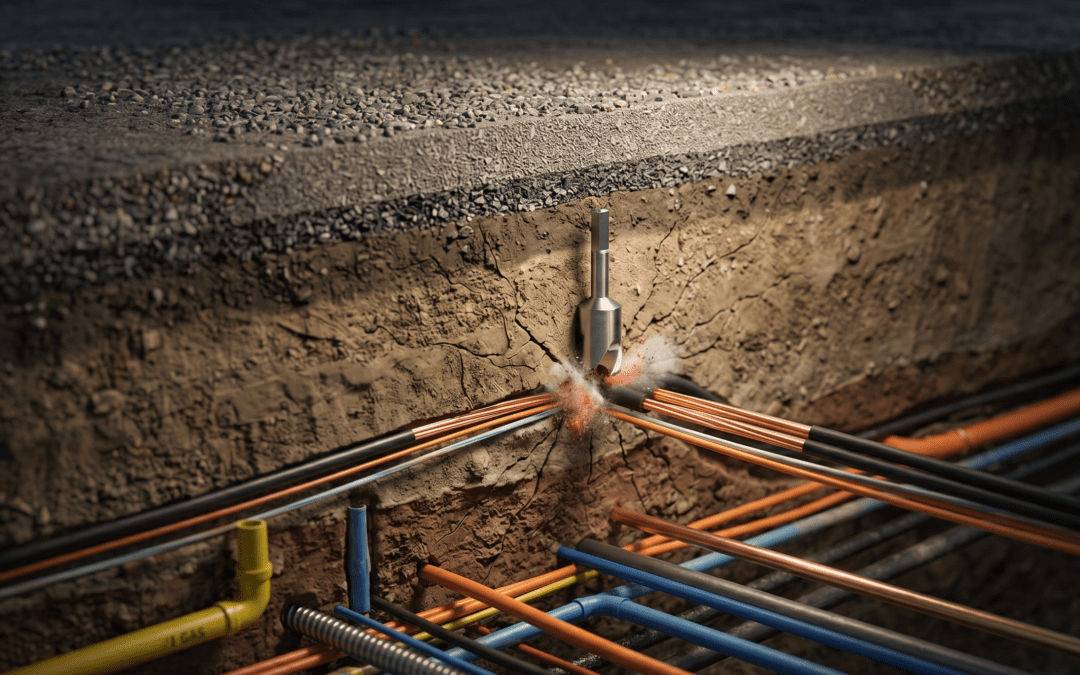
A utility strike can look like a small mistake. An excavator clips a cable. A trench bucket cracks a water main. The crew stops, someone makes a few calls, and work picks back up an hour later. That is the version site teams tell themselves.
The real bill is rarely that clean. One strike spreads across your schedule, your budget, your safety record, and your standing with the client. On a Sydney project working to tight margins, a single hit can swallow the profit you planned for the whole job.
Here is what a strike actually costs, and why the total runs higher than most teams expect before it happens to them.
The national picture is worse than most people assume
Before You Dig Australia (BYDA) ran the country’s first major study into the true cost of utility strikes. Their research put the figure at roughly $4.6 billion every year across Australia, counting both direct and indirect damage. The same research reported more than 15,000 strikes happening nationally each year.
BYDA’s damage data also points the finger at a clear group. Civil contractors are the most likely to cause a strike, with home owners close behind. Most of these incidents happen on construction sites where crews are working under pressure with information that is either incomplete or hard to use on the ground.
That last point is the one worth sitting with. Most strikes are not the result of a careless operator. They happen because the information about what sits below the surface was wrong, missing, or never checked.
The direct costs you can see straight away
When a buried service gets hit, the first round of costs lands fast.
Repairing the asset is the obvious one. A struck fibre cable, a fractured gas main, or a damaged high voltage line needs the asset owner’s crew to attend, isolate, and fix it. You do not control that timeline, and you usually do not control the invoice either.
Then there are fines and penalties. Damaging a utility can trigger regulator involvement and cost recovery from the asset owner. SafeWork NSW takes a serious view of incidents that put workers and the public at risk.
Emergency response sits in this bracket too. A gas strike can mean evacuating the site and surrounding properties. A water main break can flood a trench or a neighbouring basement. These are not line items you budgeted for at tender.
The indirect costs that quietly do more damage
The repair invoice is the part everyone notices. The bigger losses are the ones that do not show up on a single bill.
Standing time. When the site shuts down after a strike, your crew and your plant keep costing money while producing nothing. A team of operators and a hired excavator sitting idle for half a day is pure loss, and it compounds if the asset owner is slow to attend.
Schedule slip. A strike pushes every following task to the right. Concrete pours get rebooked. Subcontractors who were due on site arrive to a job that is not ready. Some of them charge for the wasted call out, and the ones you reschedule may not be free when you need them again.
Rework. If the strike damages work you have already completed, such as a freshly laid slab or a partly built service trench, you pay to undo and redo it.
Insurance and liability. Claims push up premiums. Disputes over who pays for what can drag on long after the trench is backfilled, tying up your project managers in paperwork instead of progress.
Reputation. This one has no invoice, but it can cost the most over time. Clients and head contractors remember which firms caused delays and damage. On a market as connected as Sydney’s civil and construction scene, that memory follows you to the next tender.
Add these together and the gap between the visible repair cost and the true cost of a strike is often several times over.
Why a Dial Before You Dig plan is only the starting point
Most site teams request a BYDA plan before they break ground, and they should. It is a free and useful first step. The problem is what people believe it gives them.
A BYDA plan is a set of records supplied by asset owners. It tells you that services are likely present and roughly where they run. What it often does not give you is reliable depth, exact horizontal position, or anything about services that were never recorded in the first place. Older parts of Sydney are full of legacy assets that predate clean record keeping.
So a plan tells you something is probably there. It does not tell you exactly where the cable sits, how deep it runs, or whether a second, undocumented line is sharing the same trench. That gap between “probably there” and “exactly here” is where strikes happen.
Closing that gap is the job of physical utility location services, where the position of each service is traced and verified on site rather than assumed from a record.
The safety cost that no budget can cover
Money is only part of the story. The Melbourne research into utility strikes found that telecommunications and electric cables were the most commonly struck services, and that many incidents traced back to rules not being followed.
A strike on a live electrical cable can injure or kill the operator. A gas strike can lead to a leak or an explosion that endangers the whole site and nearby homes. No saving on a survey is worth that risk, and no client wants their project linked to a serious incident.
This is the part of the equation that should settle any argument about whether locating is worth the spend.
How accurate locating changes the maths
Set the cost of proper subsurface investigation against the cost of a single strike and the decision gets simple.
Verifying services before excavation means combining records with field methods. Electromagnetic location traces metallic and traceable services. Ground penetrating radar adds a picture of the subsurface that does not depend on metal, which helps find plastic pipes, voids, and structures that other methods miss. Together they turn a rough records plan into a verified map your crew can dig to with confidence.
The output is not just a safer dig. It is a faster one. When operators know exactly where services sit, they work without stopping to second guess every bucket. Fewer surprises means fewer delays, and fewer delays protect the margin you set at tender.
That is the real return on locating. You are not paying to avoid a repair bill. You are protecting the schedule, the crew, and the relationship with your client all at once.
Treat locating as part of the job, not an extra
The firms that get caught out tend to treat subsurface investigation as an optional cost to trim. The firms that stay profitable treat it as a standard line in the plan, the same as scaffolding or traffic control.
A few hundred or a few thousand dollars spent verifying services is small next to the cost of standing time, repairs, fines, and a damaged name. The numbers from BYDA make that clear at a national scale, and every site manager who has lived through a strike can confirm it at a personal one.
If you have works coming up across Sydney and want the ground checked properly before you dig, get in touch with the team at Locate & Map to plan a survey that fits your project.